The EU’s Green Deal projects demonstrate how citizen-led initiatives can make Europe’s clean energy transition socially fair and resilient.
The independent expert report “Toward a just and fair energy transition in Europe” recently published by the European Commission, examines how Europe can deliver a clean energy transition that is not only effective but also fair and inclusive. As the EU works toward climate neutrality by 2050 under the European Green Deal, the publication looks at the social, economic, and governance challenges that affect the pace and acceptance of decarbonisation. It identifies affordability, workforce transition, and public acceptance as critical issues and stresses the need to put citizens at the centre of Europe’s energy transformation. The report was written by the Green Deal Projects Support Office (GDSO), which supports Green Deal call-funded projects by fostering closer collaboration between researchers and policymakers and enhancing the translation of scientific knowledge into policy.
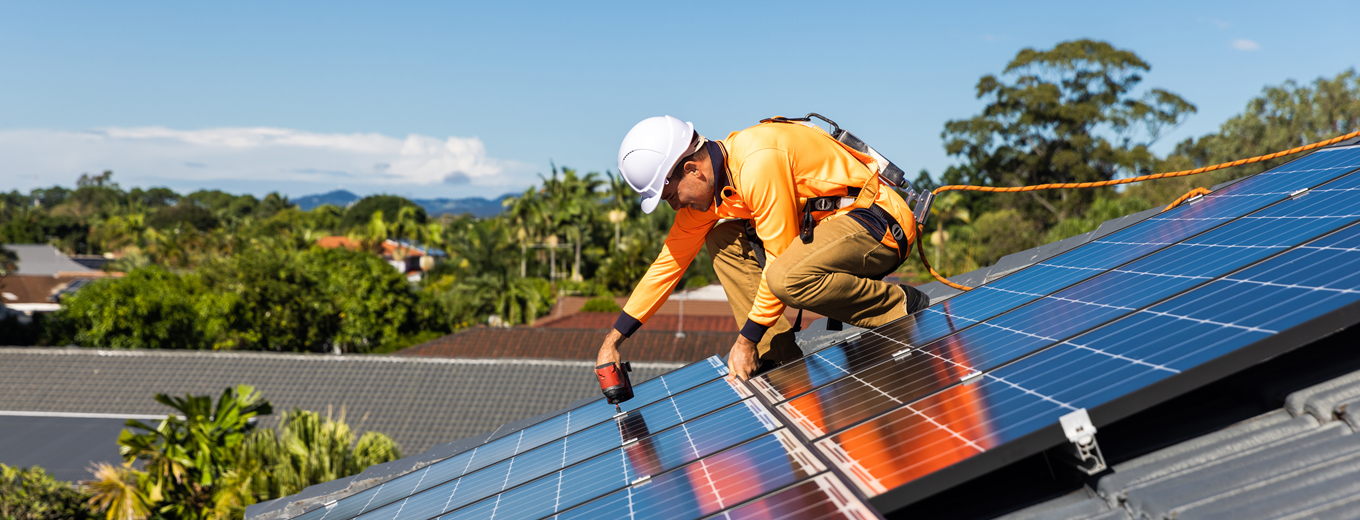
Energy poverty is one of the main challenges addressed in the report. While renewable and energy-efficient technologies can reduce long-term energy costs, their high upfront investment often excludes low-income households. Evidence shows that households in countries such as Germany, Italy and Spain could achieve significant annual savings through rooftop solar installations, yet many vulnerable groups remain unable to access these benefits due to high installation costs. At the same time, the report points to regional economic dependencies on fossil fuels. In many European regions, coal, oil and gas industries remain deeply embedded in local economies and identities, meaning that a phase-out risks job losses, economic dislocation and declining social cohesion.
Against this backdrop, the report analyses how citizen engagement, social innovation and participatory governance can help steer a just and fair energy transition. It maps the social, economic and governance dimensions of Europe’s clean energy transition and situates its analysis within key EU policy instruments, including the European Green Deal. The report shows how bottom-up initiatives can reduce energy bills, support workforce transition and strengthen public acceptance, while ensuring that the benefits of the energy transition are shared equally and that no one is left behind. By examining a set of Green Deal call-funded projects, like the ARV project, the report shows how climate and energy objectives can align with social justice goals, such as affordable clean energy, secure livelihoods and broad citizen participation. Each initiative translates just transition principles into concrete action, offering practical and replicable ways that can be adopted across Europe. Taken together, these projects confirm that addressing energy poverty and the needs of vulnerable groups is most effective when solutions are rooted in local communities and supported by the government.
Overarching legislative packages like the European Green Deal and the Clean Industrial Deal, provide the strategic framework for decarbonisation while embedding the principle that no person and no place should be left behind. Targeted funding, like the Cohesion Fund and the European Regional Development Fund, helps regions modernise energy systems, invest in renewables and efficiency, and build local resilience. The funds turn climate initiatives into real social, economic and environmental gains.
One such example is the ARV project, a Horizon 2020-funded initiative implemented by the Norwegian University for Science and Technology (NTNU) that aims to create climate-positive circular communities while accelerating building renovation rates across Europe. ARV shows how deep energy renovation – an approach that involves building upgrades to drastically reduce energy emissions – can help deliver a fair energy transition by bringing together environmental goals, social inclusion, and economic realities. The project focuses on net zero-emission buildings and neighbourhoods and seeks to build resilient and affordable renovation solutions that can be deployed at scale. ARV tests these solutions across six large-scale demonstration communities in Europe, covering four different climatic zones. Beyond technical innovation, ARV places strong emphasis on citizen engagement and co-creation. The project involves residents, city authorities and local businesses through participatory design processes and energy literacy activities that provide real-time feedback on energy use and environmental performance. At the same time, ARV creates business models and funding tools to make energy renovations affordable, especially for lower-income communities. It also produces practical guidelines and policy advice for energy-efficient, circular, and digital construction solutions, showing how EU-funded research can turn climate goals into real, community-focused results that support a fair and inclusive energy transition.
The report ultimately shows that Europe’s energy transition will succeed if people and communities can actively shape it. The experiences from Green Deal funded projects illustrate that locally rooted solutions, supported by policies and funding, can make clean energy more affordable and create new opportunities. Overall, the report highlights how citizen-centred approaches can help turn Europe’s climate goals into practical outcomes.