At SwissCore’s Education Seminar, Swiss and EU experts explored evolving Erasmus+ models, excellence initiatives, and strategic cooperation.
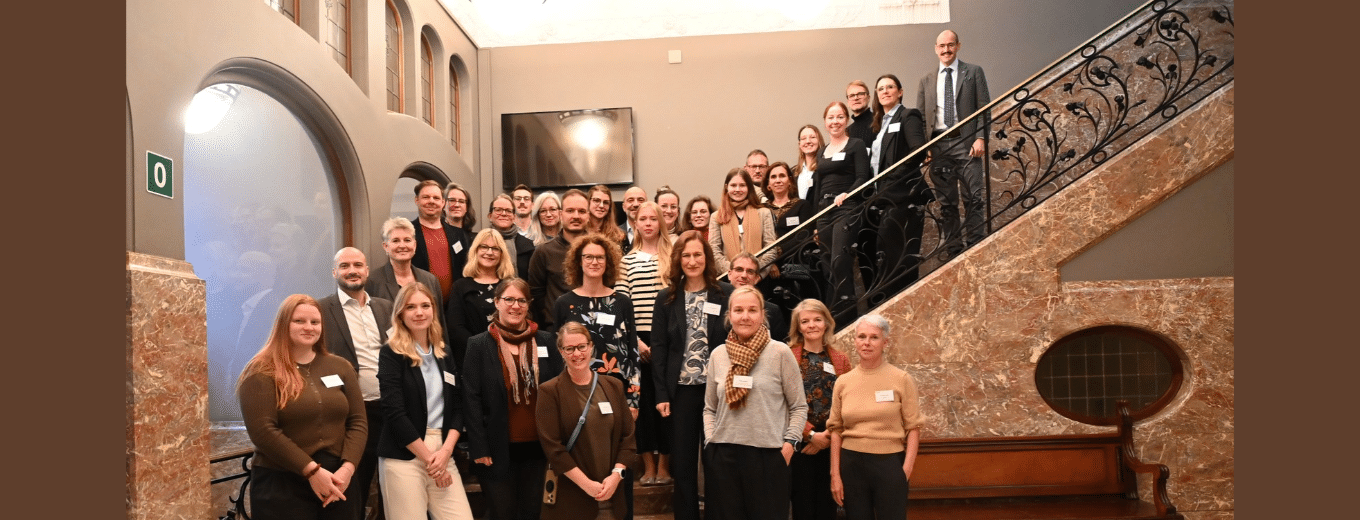
On 3 and 4 November, SwissCore hosted another edition of the Education Seminar, our annual flagship event that brings Swiss education stakeholders to Brussels. This year’s event saw 35 guests from higher, school, and adult education travelling to the EU bubble to learn more about avenues of cooperation with European partners. A particular spotlight was placed on Erasmus+ cooperation partnerships which are managed centrally, such as Teacher Academies, Alliances for Innovation, and Capacity Building.
Over two days, participants received presentations from various European experts and had plenty of opportunities for networking and exchanging experiences. After a general introduction to Brussels, Vidar Pedersen, Education Attaché at the Mission of Norway to the EU, familiarised participants with different cooperation partnership models under Erasmus+. His intervention demonstrated how Erasmus+ has become an increasingly political tool over the past 25 years, as well as how different cooperation formats successfully engage a range of actors, including private businesses and different education sectors. Vidar also presented the recently published socio-economic evaluation of the Erasmus+ programme by the Norwegian government. In his words, the results highlight an added value that cannot be replaced by national solutions: for any country seeking to collaborate internationally in education, “being part of Erasmus+ makes you a more attractive partner”.
Another input was delivered by Veronika Kupriyanova, Deputy Director of the Association for Academic Cooperation (ACA), on the European excellence agenda. Her presentation aptly demonstrated how the concept of ‘excellence’ first emerged at the national and later at the European level, and how it has since slowly evolved into “inclusive excellence”. Importantly, the current model for excellence has moved from individual, institutional competitiveness to joint European competitiveness, which foresees European institutions joining forces, such as through the European Universities Initiative.
In the afternoon, Marta Gutierrez Benet, Head of Sector for Erasmus+ Implementation at the Directorate-General for Education, Culture, Youth and Sport (DG EAC), presented the main novelties of the Erasmus+ Annual Work Programme 2027 and gave an overview of the Commission’s proposal for the next Erasmus+ programme structure and objectives from 2028 to 2034. These inputs were rounded off by a panel featuring Florian Pecenka and Rachel Lynch, Education Attachés of Austria and the UK, respectively. The panel offered reflections from a Member State and soon-to-be Associated Country on the deliberations of both the European Parliament and the Council of the EU regarding the Commission’s proposal, as well as how strategic policy initiatives, such as the Union of Skills, are perceived and taken up by national representatives. As every year, the seminar commenced with a reception kindly hosted by the Swiss Mission to the EU and concluded with a joint dinner.
SwissCore warmly thanks the speakers and participants for their enthusiasm, curiosity, and engagement, and looks forward to welcoming them again soon.