
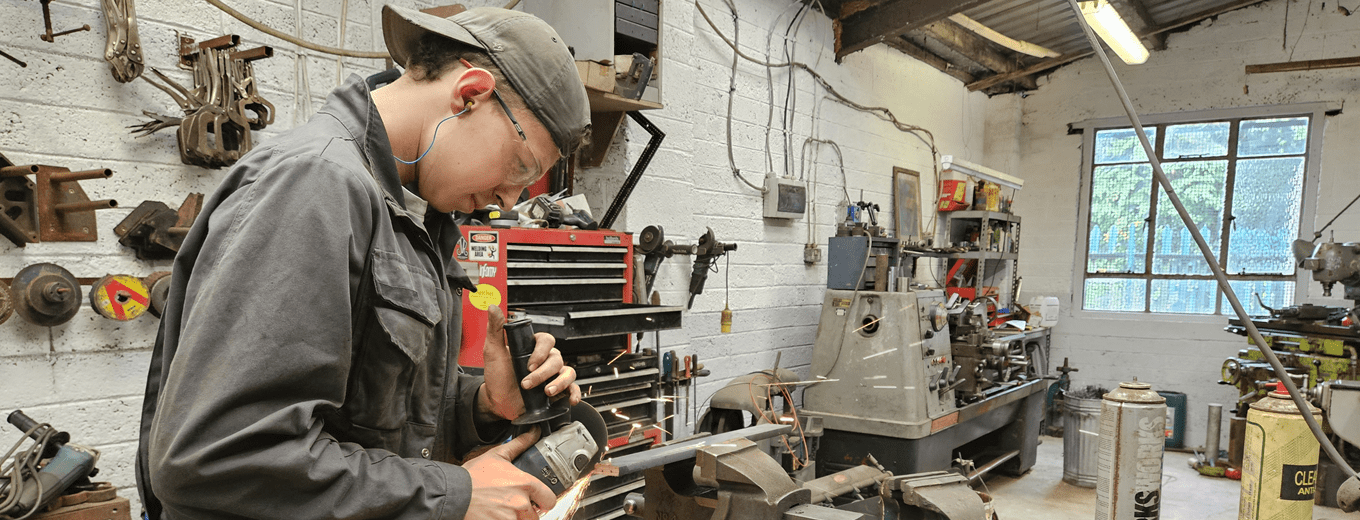
With swype, Swiss VET graduates can combine language learning and internships abroad, making VET mobility more accessible and attractive than ever.
Going on an international exchange, immersing oneself in a new culture, and broadening horizons – the dream of a learning stay abroad remains far more common for students in higher education than for those in vocational education and training (VET). Although the EU is setting ambitious goals for VET mobility (see SwissCore article) and is expected to further elaborate an action plan in its forthcoming VET Strategy, Switzerland and its European neighbours face multiple challenges for a sustainable change. One key factor is that coordinating a weeks-long absence can be more complicated for dual VET students, particularly those employed in small- and medium-sized enterprises.
The Swiss Young Professional Exchange programme, or swype, directly addresses this challenge. Organised by Travail.Suisse and its member organisations, Switzerland’s second-largest umbrella organisation for workers, in partnership with Linguista and co-financed by Movetia, the Swiss national agency for the promotion of exchanges and mobility in education, the project has been running since 2024. Swype enables recent VET graduates to spend four weeks in Cork, Ireland, to improve their English and gain work experience in an international environment. Participants begin with a one-week language preparation course in Ireland, focusing on workplace communication, followed by a three-week internship at a local company or organisation. All the while, accommodation and half-board are provided by host families, ensuring full emersion in the local culture. A key feature making the project particularly accessible: thanks to Movetia’s co-funding and support from Travail.Suisse, participants pay only a symbolic fee of 200 CHF for the entire four-week.
Swype thus responds to the heterogeneous landscape of mobility opportunities for VET students in Switzerland. Existing initiatives are predominantly driven by public funders, such as cantons or VET schools. Worker organisations such as Travail.Suisse have traditionally played a minor role – until now. As a national umbrella organisation spanning diverse sectors, Travail.Suisse’s engagement further introduces a mobility offer that brings together participants from different regions and from varied socioeconomic and professional backgrounds. Moreover, swype is tailored to the VET pathway by offering mobility immediately after the completion of an apprenticeship: participants can finish their final exams and work contracts in early summer, spend four weeks abroad, and return in time to start a new position in Switzerland by September.
For participants, swype offers a unique opportunity to improve their English and develop intercultural competences, without missing classes at home or requesting an absence at their place of employment. Employers equally benefit from the programme, as it equips a cohort of VET graduates with international experience, enhancing their flexibility and intercultural competences. Importantly, initiatives like swype also have the potential of making VET more attractive for young people, which is a key political demand of Travail.Suisse and an important concern for Swiss companies and is equally reflected in the Swiss federal government’s VET 2030 strategy. Unsurprisingly, the project has attracted high interest from applicants.
Another factor limiting the integration of mobility into the Swiss VET system is its unique dual structure. However, swype demonstrates that mobility is possible even when host countries do not have an identical system. One challenge, as project manager Miriam Häfliger notes, is that foreign employers may underestimate the skills and responsibility levels of Swiss VET graduates, assigning them simpler tasks than they are accustomed to in Switzerland. Nevertheless, participant feedback highlights the value of such intercultural exchanges. Hosting organisations, in turn, report being impressed by the skills of Swiss graduates and express growing interest in Switzerland’s dual VET model. Now in its third year, swype will again offer Swiss VET graduates an opportunity to go abroad this summer. Since its launch, the programme has been growing in both participant numbers (from 17 in 2024 to over 40 in 2025) and regional diversification, this year also opening for graduates from Ticino, Switzerland’s Italian speaking region.