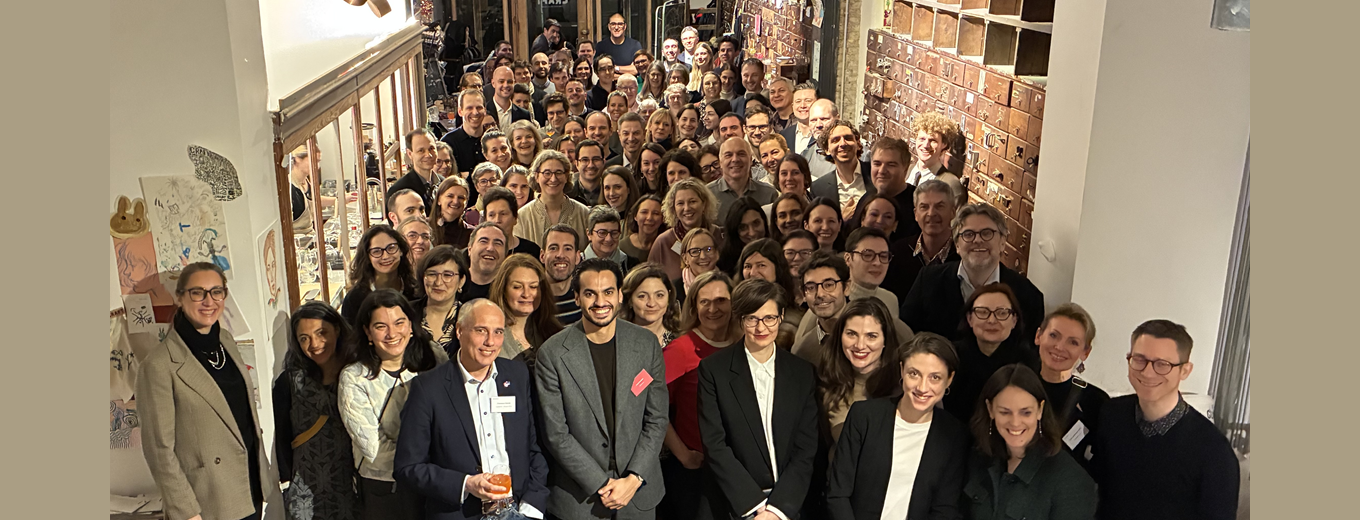
A Swiss delegation of 100 colleagues from R&I institutions came to Brussels for the annual SwissCore seminar, with plenty of questions and interest to engage.
From 26 to 28 January 2026, SwissCore welcomed more than 100 representatives from Switzerland’s research and innovation ecosystem to Brussels for the annual SwissCore Research & Innovation (R&I) Seminar. The event brought together delegates from federal authorities, funding organisations, universities, universities of applied sciences, research organisations and national contact points to discuss key developments in Horizon Europe and European research and innovation policy and their implications for Switzerland.
The first part of the seminar focused on strategic developments shaping the future of European research and innovation. Notably, the European Commission’s DG RTD presented its proposal for the next Framework Programme for research and innovation (FP10) and its link to the European Competitiveness Fund (ECF). The group then had the opportunity to enter into an extended discussion with one of the chief architects of the Commission’s FP10 proposal. After which followed a session on Switzerland’s association to Horizon Europe and initial reactions to FP10, addressing both opportunities and raising open questions for Swiss participation.
In the afternoon, participants engaged in a fishbowl discussion on the nexus between dual use (military and civilian R&I applications) and research security, addressing the growing tension between openness in international research collaboration and the need to safeguard strategic interests. The interactive format allowed the audience to actively contribute alongside experts from EU institutions, academia and policy networks. What became clear in the discussion is that we live in strange times and see a turning point in the role that R&I could or should take in furthering military or security applications. The Commission representative spoke of a big historical moment stating that opening the research and innovation framework to dual use could be a “major brick of European integration”. Furthermore, it became clear that “research security is becoming a prerequisite for dual-use”.
The day concluded with a panel discussion on global cooperation in R&I, bringing together attachés from several EU member states and the UK. The discussion underscored the importance of trusted international partnerships in a more competitive and geopolitically sensitive research environment. The EU is shifting its global collaboration approach by “considering the benefits but also the risks of the European Union in working with international partners”. A stark dilemma became apparent: On the one hand, the EU aims to maintain flexibility in deciding which international partners to engage with, on which topics, and in determining where cooperation should be limited. On the other hand, international partners and research communities want and need stability and predictability in the EU framework.
The seminar continued on Wednesday with parallel sessions dedicated to flagship EU instruments, including Marie Skłodowska‑Curie Actions (MSCA), the European Research Council (ERC), the European Innovation Council (EIC) and the Euratom programme; followed by a panel discussion on digital stacks and AI, addressing supercomputing, AI Factories and the European Digital Innovation Hubs (EDIH). These sessions provided participants with direct insights from European Commission colleagues and an opportunity for targeted exchanges on funding opportunities and policy priorities. All these sessions were full of enthusiasm from both the EU and the Swiss side to finally be able to work together again in Horizon Europe and beyond.
The SwissCore R&I Seminar confirmed its role as a key platform for dialogue between the Swiss R&I community and EU stakeholders and for creating and nurturing these networks and relationships. SwissCore thanks all speakers and participants for their active contributions and looks forward to continuing the exchange throughout the year.